
The new generation of differential pressure measurement
Every pascal counts
Combining precise measurement, seamless commissioning, and reliable control capabilities to enhance building automation performance.
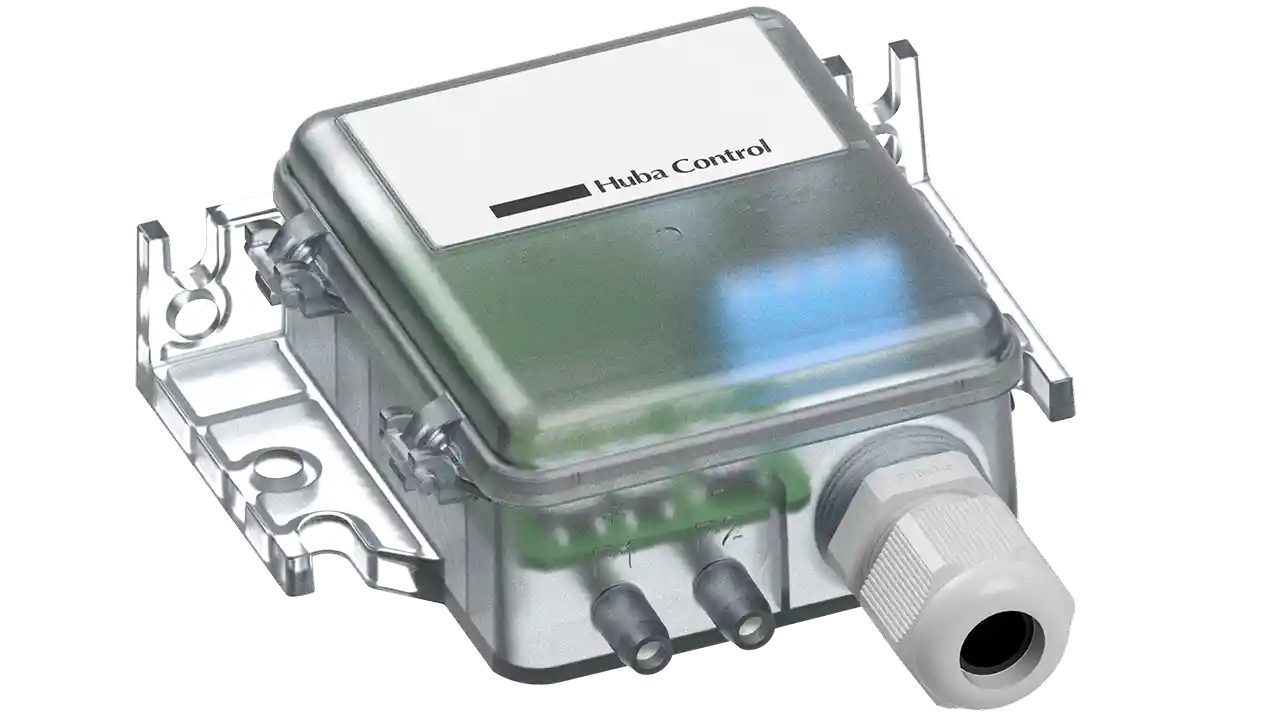
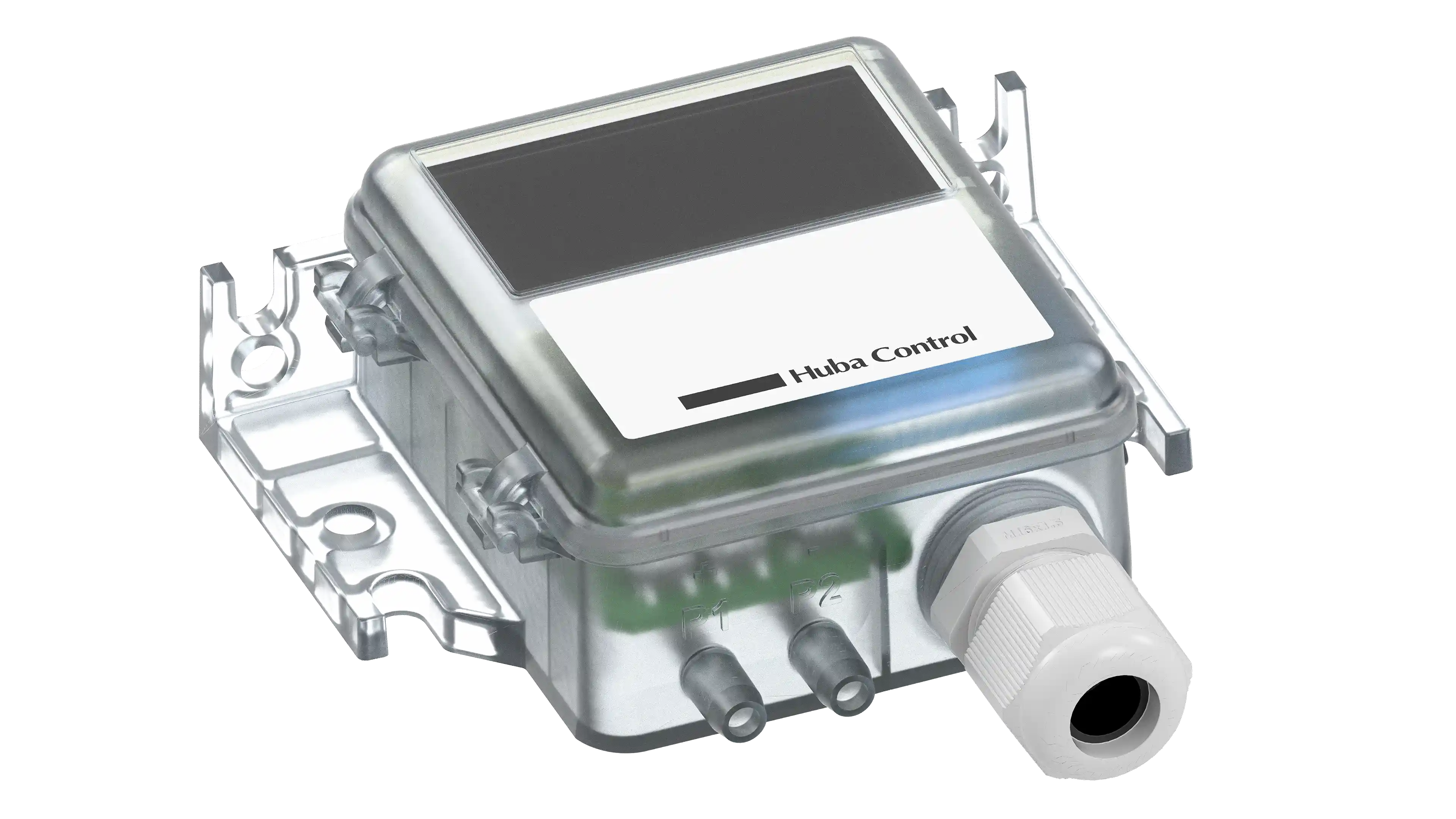
Designed for modern HVAC and ventilation applications, the DH400 Series offers a versatile and reliable solution for measuring differential pressure and volumetric flow while supporting precise system control. Flexible configuration options, including PID control and Modbus communication, allow seamless integration into a wide range of systems. An optional backlit LCD display provides clear local indication of process values, and intuitive onboard controls enable rapid setup and commissioning, helping to reduce installation time and costs.
The right solution for every requirement
Measure differential pressure and volume flow. Regulate differential pressure.
Ensures stable pressure conditions throughout the system
Reliable differential pressure measurement enables the monitoring of filters and fans in HVAC systems. In addition, the DH400 series is suitable for monitoring ventilation ducts in buildings as well as in production and clean rooms.
Precisely measure and monitor volume flow
Designed for HVAC applications, the DH400 Series enables precise measurement and monitoring of volumetric airflow in ventilation ducts, supporting optimal indoor air quality and energy-efficient system operation.
Precise and efficient differential pressure control
The integrated PID controller ensures precise and energy-efficient regulation of ventilation systems. By directly controlling frequency converters and damper actuators, the DH400 Series helps optimize airflow, reduce energy consumption, and improve system performance.
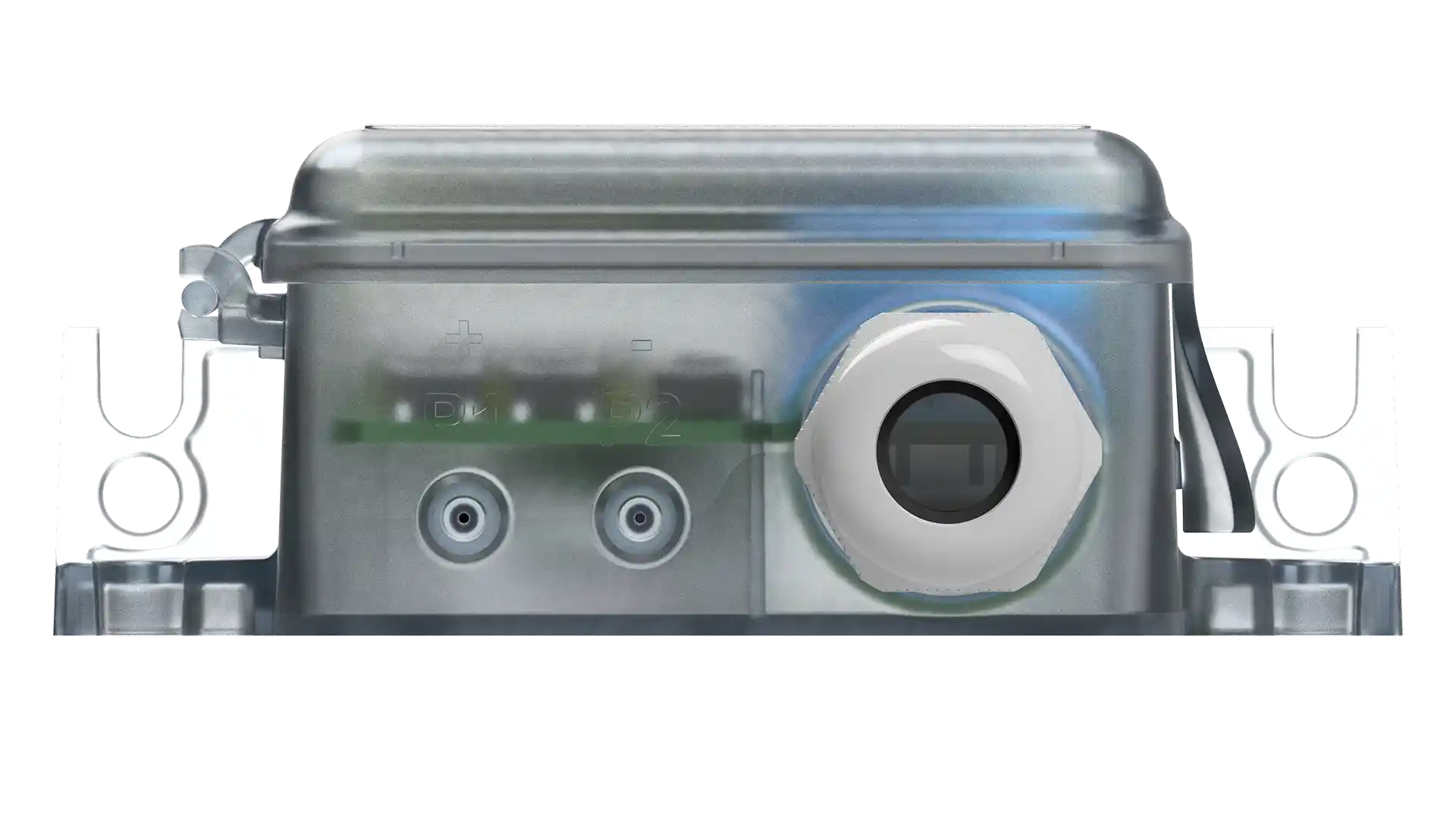
Precise across the entire measuring range
The DH400 Series is built on advanced MEMS (Micro-Electro-Mechanical Systems) technology, providing highly accurate, stable, and reliable measurement performance while maintaining a compact and robust design.
The precise bidirectional differential delivers pressure measurement over the complete measuring range. Eight configurable pressure ranges can be selected directly on the device, allowing seamless integration into diverse HVAC and industrial applications while providing exceptional flexibility and ease of use.
Technical data
* preliminary values, as of 09/2026. Approvals and compliance depend on the version.
Analog versions from Q1/2027. Modbus versions planned from Q3/2027.
FAQ about Huba Control DH400 differential pressure transmitters
Measured variables and applications
What is the Huba Control DH400 and what is it used for?
Huba Control DH400 is a series of differential pressure transmitters for ventilation and air conditioning systems and building automation. It combines differential pressure measurement, volumetric flow measurement and PID control in one product family. Typical applications include monitoring filters and fans, measuring air volume flow and maintaining defined pressure conditions in buildings, production areas and cleanrooms.
How does a differential pressure transmitter in the DH400 series measure?
A Huba Control DH400 differential pressure transmitter measures the differential pressure between two connected measuring points and converts it into an output signal.
What is the difference between DH421, DH423 and DH425?
Huba Control DH421 provides an analogue differential pressure signal. DH423 is intended for volumetric flow measurement. DH425 controls differential pressure using an integrated PID controller. Selection therefore starts with the task: measuring pressure, measuring volumetric flow or controlling pressure. The measuring range, output signal and other options are then selected to suit the application.
Which Huba Control differential pressure sensor is suitable for monitoring filters in ventilation systems?
The Huba Control DH421 is suitable for continuous differential pressure monitoring across filters in ventilation and air conditioning systems. It measures the pressure difference between the measuring points upstream and downstream of the filter and provides an analogue signal for building automation. Its high accuracy at low pressures makes DH421 perfectly suited to filter monitoring in HVAC systems.
Can DH400 monitor pressure conditions in production areas and cleanrooms?
Yes. Huba Control DH400 is suitable for monitoring defined pressure conditions in production areas and cleanrooms, as well as in ventilation ducts. The measuring points must be chosen to represent the pressure difference to be monitored.
What is the difference between a differential pressure transmitter and a differential pressure switch?
A differential pressure transmitter provides a continuous measurement signal; a differential pressure switch indicates when a switching threshold is exceeded or undershot. The Huba Control DH421 provides an analogue differential pressure signal, enabling continuous evaluation. Within the DH400 series, DH425 with integrated PID control is available for pressure control.
Measuring ranges and configuration
Which differential pressure measuring ranges does Huba Control DH400 offer?
The Huba Control DH400 series offers bidirectional differential pressure measuring ranges from ±25 Pa to ±15 000 Pa. The overall range is covered by different hardware versions. DH421 is available with hardware providing full-scale values from 25 to 2 500 Pa and hardware providing full-scale values from 1 500 to 15 000 Pa. The adjustable measuring ranges are within the selected hardware version.
Which eight measuring ranges are available in the DH421 version for low differential pressures?
In the Huba Control DH421 version for low differential pressures, the full-scale values 25, 50, 100, 300, 500, 1 000, 1 500 and 2 500 Pa can be selected. The characteristic curve determines whether the selected full-scale value describes, for example, a bidirectional range or a range from zero to full scale. These eight settings belong to the same hardware version. DH421 can be supplied with the pressure range and characteristic curve range preset, or configured finally in the field using DIP switches, with additional settings available via buttons and the LCD display.
Which eight measuring ranges are available in the DH421 version for higher differential pressures?
In the Huba Control DH421 version for higher differential pressures, the full-scale values 1 500, 2 000, 2 500, 5 000, 7 500, 10 000, 12 500 and 15 000 Pa can be selected. The characteristic curve and mapping to the output signal are specified to suit the measurement task. Switching between these settings does not replace switching to different sensor hardware. DH421 can be supplied with the pressure range and characteristic curve range preset, or configured finally in the field using DIP switches, with additional settings available via buttons and the LCD display.
Does DH400 measure both positive and negative pressure differences?
Yes. Huba Control DH400 supports bidirectional differential pressure measurement across the respective measuring range. DH421 also offers characteristic curves from zero to full scale, as well as asymmetric and inverse curves. The selected characteristic curve defines how the measured pressure is mapped to the electrical output signal.
Which pressure units does Huba Control DH421 support?
Huba Control DH421 supports the pressure units Pa, mbar and inWC. inWC stands for inches of water column. The unit must be used consistently when configuring the device and scaling the measurement signal in the controller. Changing the unit does not extend the sensor's physical measuring range.
Are custom pressure ranges and characteristic curves possible for DH421?
Yes. User-definable pressure ranges and characteristic curves are possible for Huba Control DH421. Settings must remain within the limits of the selected hardware. We agree the required start and end values and the mapping to the output signal with you. Include these requirements in your technical enquiry.
Output signals and control
Is DH421 available with 0–10 V or 4–20 mA?
Yes. Huba Control DH421 offers voltage outputs of 0–10 V, 2–10 V, 0–5 V and 1–5 V, and current outputs of 0–20 mA and 4–20 mA. The appropriate interface is selected according to the input of the connected controller. Output signal, characteristic curve and pressure range must be matched to the application together. DH421 can be supplied with the output signal preset, or configured finally in the field using DIP switches.
Which two-wire and three-wire versions are available for DH421?
Huba Control DH421 offers the voltage outputs and the 0–20 mA output as three-wire versions. Two-wire and three-wire versions are available for 4–20 mA. Supply, load and wiring depend on the ordered version. Its wiring diagram and technical specifications apply to the electrical connection.
What do linear and square-root characteristic curves mean for DH421?
With a linear characteristic curve, the output signal of Huba Control DH421 follows the measured pressure difference. The square-root characteristic curve represents the square root of the pressure difference and supports applications where volumetric flow is derived from a differential pressure signal. Correct volumetric flow evaluation also requires the measurement geometry and its characteristic coefficient.
How does Huba Control DH423 measure air volume flow in ventilation ducts?
Huba Control DH423 is intended for volumetric flow measurement in ventilation ducts, ventilation pipes and at fans. It is based on suitable differential pressure measurement with a defined relationship to volumetric flow. Measurement geometry, characteristic coefficient and required measuring range are considered during configuration. A pressure difference alone, without this relationship, does not provide correctly scaled volumetric flow.
Can DH425 control fans and damper actuators using a PID controller?
Yes. Huba Control DH425 has an integrated PID controller for differential pressure control. It compares the measured value with the setpoint and provides a control signal for frequency converters or damper actuators. Output signal and controller settings must match the actuator and the dynamics of the ventilation system.
Display and measurement quality
Can the measurement signal filtering be adjusted on DH421?
Yes. Huba Control DH421 offers fast and slow filter settings. Slower filtering smooths fluctuating signals more strongly, while a faster setting passes on changes more directly. A response time of 20 ms is planned for the DH400 series. System design must also take the selected filtering and output configuration into account.
Is Huba Control DH400 available with and without an LCD display?
Yes. Huba Control DH400 is planned with an optional local LCD display. DH421 offers versions without a display or with a black-and-white LCD display and white backlighting. The display allows measurements to be read directly on the device. The required display option is specified when ordering.
Which parameters can be configured locally on DH400?
Huba Control DH400 can be configured locally using the provided controls. Depending on the version, DH421 settings include measuring range, characteristic curve, output signal and filtering; DIP switch presets are provided for several settings.
What measurement accuracy does Huba Control DH400 achieve?
Depending on the version, Huba Control DH400 achieves a measurement accuracy of ±0.5 % FS within the calibrated temperature range of −20 to +70 °C. This performance specification is preliminary. FS stands for Full Scale; the corresponding reference quantity and test conditions are part of the technical specification. Selection must be based on the accuracy specifications of the particular measuring range and chosen version.
What does the calibration range of −20 to +70 °C mean for DH400?
Huba Control DH400 is planned to be calibrated from −20 to +70 °C ambient temperature. Within this range, the sensor achieves the specified measurement accuracy.
Which sensor technology is Huba Control DH400 based on?
Huba Control DH400 is based on MEMS technology, with the sensing element, signal conditioning and electronics integrated on one chip. The sensor platform enables precise measurement of low differential pressures, fast measurement processing and high long-term stability. Performance values are specified for the respective measuring range and particular device version.
Selection and system integration
How do you select a differential pressure sensor for ventilation and building automation?
For Huba Control DH400, selection starts with the function: measuring differential pressure, measuring air volume flow or controlling differential pressure. The measuring range, measuring direction and electrical interface then determine the appropriate version. The display is a further selection criterion.
How does a DH400 transmitter differ from an individual OEM differential pressure sensing element?
Huba Control DH400 is a device family for measurement and control in ventilation and air conditioning systems. It combines sensing with signal conditioning and device functions such as configuration, electrical interface and optional display. An individual OEM sensing element, by contrast, is integrated into separate electronics and a device platform. Selection depends on whether a complete measuring instrument or a sensing element for in-house device development is required.
How can Huba Control DH400 be compared with other HVAC differential pressure transmitters?
For a technical comparison of the Huba Control DH400 series, measuring range, measuring direction, accuracy reference quantity, response time, interface and protection rating are decisive. Local display, configuration and the zero adjustment procedure also influence selection. Accuracy specifications must be assessed with the same reference quantity and under comparable conditions. Within the DH400 series, DH421 offers differential pressure measurement, DH423 volumetric flow measurement and DH425 PID control. Versions with the same measurement task and operating conditions should be compared.
Can Huba Control DH400 replace an existing type 699 differential pressure sensor?
We assess a suitable DH400 version using the technical specifications of your existing Huba Control type 699 and the system requirements. We compare pressure range, operating limits, connections, available space, signal type and scaling. Display and configuration options are also considered. The replacement recommendation is specific to the application; it does not establish general direct interchangeability.
When is a permanently installed DH400 transmitter preferable to a portable differential pressure measuring instrument?
Huba Control DH400 is intended for integration into a system for continuous differential pressure measurement, volumetric flow measurement or pressure control. A portable differential pressure measuring instrument is typically used for individual checks and service measurements. For continuous evaluation in building automation, the DH400 function, output signal and configuration must match the connected controller.
What is the difference between air velocity and air volume flow?
Air velocity describes how fast air flows at a measuring point. Air volume flow describes the volume of air transported through a cross-section per unit of time. Huba Control DH423 is intended for volumetric flow measurement. Evaluation considers the selected measurement geometry and its characteristic coefficient; air velocity and volumetric flow are therefore different measured variables.
What should be considered when connecting pressure tubing to DH400?
For Huba Control DH400, pressure tubing must be connected to the intended measuring points and correct device ports. Leaking connections, kinked tubes and swapped connections can alter the measurement result. The connection and operating instructions of the particular DH400 version apply to installation and commissioning.
Availability and technical enquiries
When will the analogue Huba Control DH400 versions be available?
We plan the analogue Huba Control DH421, DH423 and DH425 versions from Q1/2027. They cover differential pressure measurement, volumetric flow measurement and PID control. We agree sample requirements, the planned start of series production and the required version with you for the particular application.
When will Huba Control DH400 be available with Modbus RTU?
We plan the Huba Control DH400 versions with Modbus® RTU from Q3/2027. Devices with one or two pressure sensors are planned for the Modbus versions. Please include the number of measuring points, required pressure ranges and planned date of use in your enquiry.
Which protection rating and approval does Huba Control DH400 offer?
Versions with IP65 protection and UL approval are planned for the Huba Control DH400 series. The specific scope of approval and conditions for the protection rating are defined for the respective device version. We select the appropriate version for your application based on installation conditions and required approvals.
Is a calibration certificate available for Huba Control DH421?
Yes. We offer a calibration certificate as an option for Huba Control DH421. Include the required device version, measuring range and documentation in your enquiry. We agree the scope of the certificate with you.